
India is home to one of the world’s richest traditions of folk art. Passed down through generations, the folk art of India reflects the country’s diverse communities, regional traditions, religious beliefs, festivals, nature, and everyday life. From the intricate Madhubani paintings of Bihar to the geometric Warli art of Maharashtra, each art form tells a story rooted in its place and people
Table of Contents
ToggleWhat Is Folk Art of India?
Indian folk art refers to traditional artistic practices created and preserved by local and tribal communities. Folk art of india Unlike art produced primarily for galleries or formal institutions, folk art has historically been closely connected with daily life, rituals, celebrations, spirituality, and community traditions.
These art forms are often created using locally available materials such as natural pigments, clay, fabric, bamboo, wood, and handmade paper. Designs and techniques are commonly passed from one generation to another, helping preserve the cultural identity of different communities.
History and Evolution of Indian Folk Art
The history of Indian folk art stretches back centuries. Before modern art institutions and formal art education became widespread, communities used visual art to decorate homes, commemorate important occasions, tell stories, and express religious beliefs.
Many traditional paintings were associated with weddings, harvests, festivals, births, and religious ceremonies. Over time, these practices evolved while retaining distinctive regional characteristics.
Today, Indian folk artists are adapting traditional techniques for contemporary audiences. Paintings once created primarily on walls, floors, or ceremonial surfaces can now be found on paper, canvas, textiles, home décor, and other products.
Famous Folk Art Forms of India
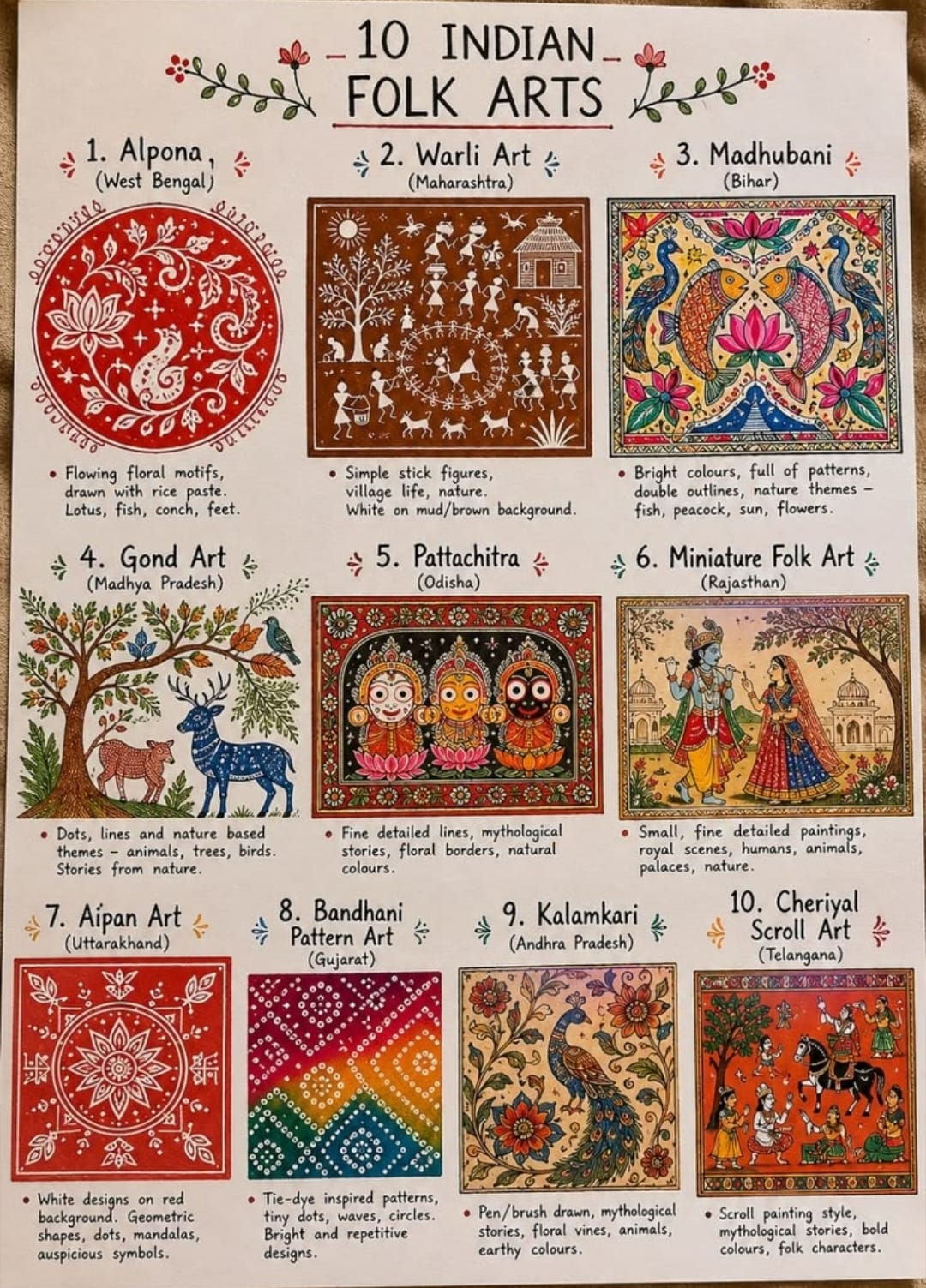
India has numerous regional folk and tribal art traditions. Here are some of the best-known examples.
| Folk Art | Region | Key Features |
|---|---|---|
| Madhubani Painting | Bihar | Bold outlines, intricate patterns, flowers, animals, mythological figures, and natural colours. |
| Warli Art | Maharashtra | Simple geometric forms, especially circles, triangles, and squares; depicts farming, dancing, hunting, weddings, and community life. |
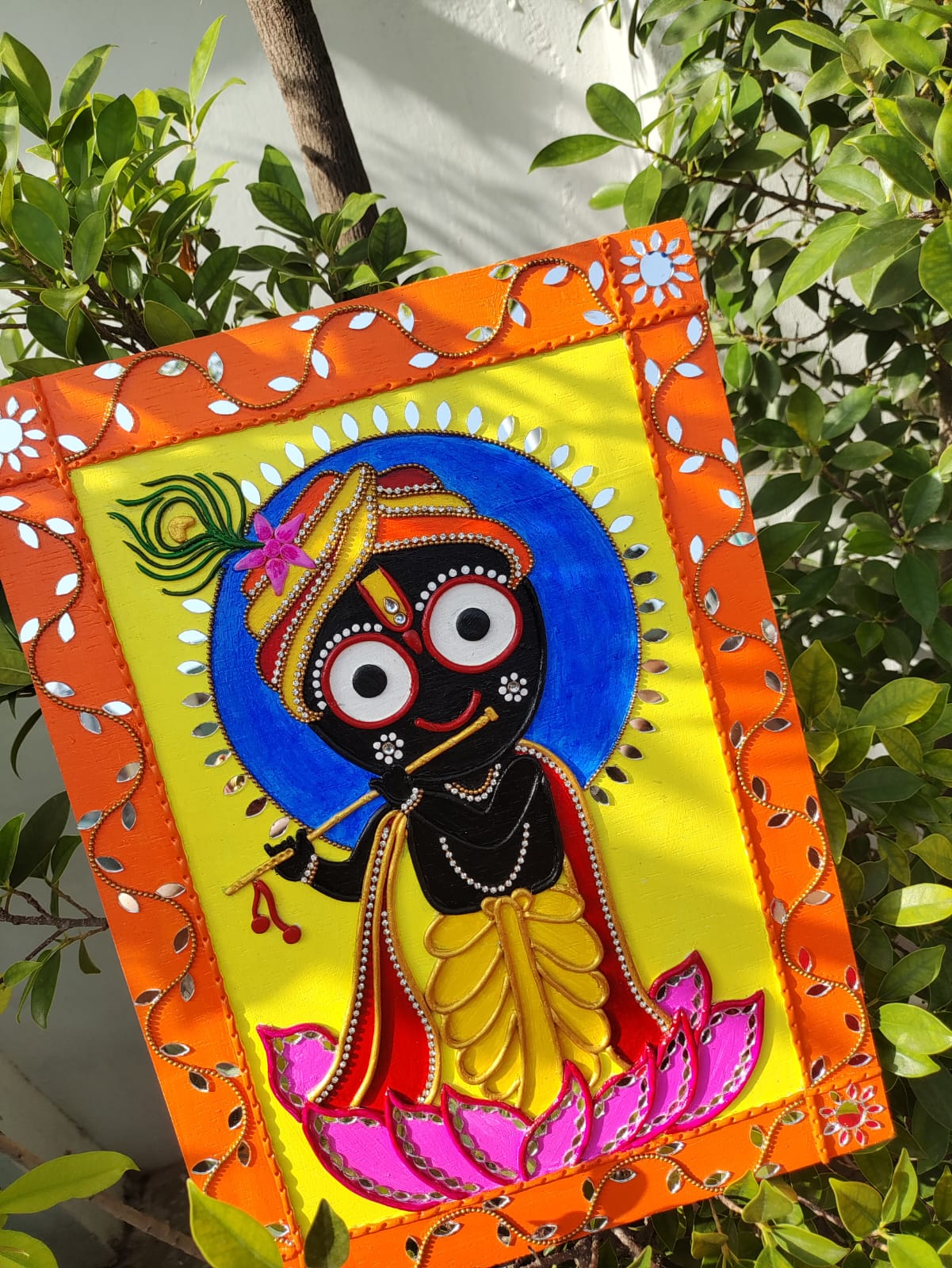
| Pattachitra | Odisha | Detailed compositions, decorative borders, strong outlines, and Hindu mythological themes, including Lord Jagannath and Krishna. |
| Gond Art | Madhya Pradesh | Depicts animals, birds, plants, and nature using intricate dots, lines, patterns, and repetitive motifs. |
| Kalamkari | Andhra Pradesh & Telangana | Pen-drawn designs featuring mythology, floral patterns, trees, and figures; traditionally uses natural dyes. |
| Phad Painting | Rajasthan | Large painted scrolls narrating stories of folk deities and heroes, combining visual art with oral storytelling. |
| Mata Ni Pachedi | Gujarat | Ritual textile art featuring goddesses and religious imagery, with rich colours, detailed figures, and symbolic compositions. |
| Sohrai & Khovar Art | Jharkhand | Mural traditions featuring nature, animals, plants, and geometric designs; associated with harvest and marriage rituals. |
Themes and Symbols in Indian Folk Art
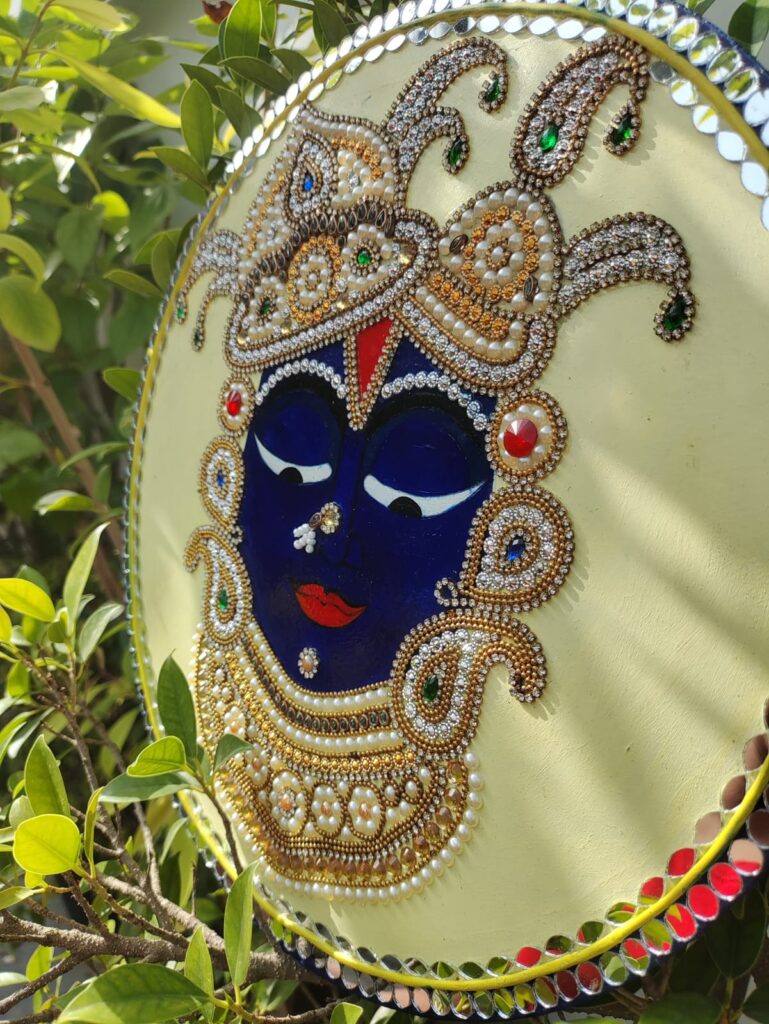
Nature is one of the most recurring themes in Indian folk art. Trees, flowers, birds, animals, rivers, the sun, and other natural elements frequently appear in traditional compositions.Religion and mythology are equally important. Stories about Hindu deities, local gods, goddesses, heroes, and sacred events have inspired generations of artists.Everyday life is another major theme. Farming, marriage ceremonies, village celebrations, dancing, hunting, and community gatherings can all appear in folk paintings.
Folk Art, Tribal Art and Traditional Art: What's the Difference?
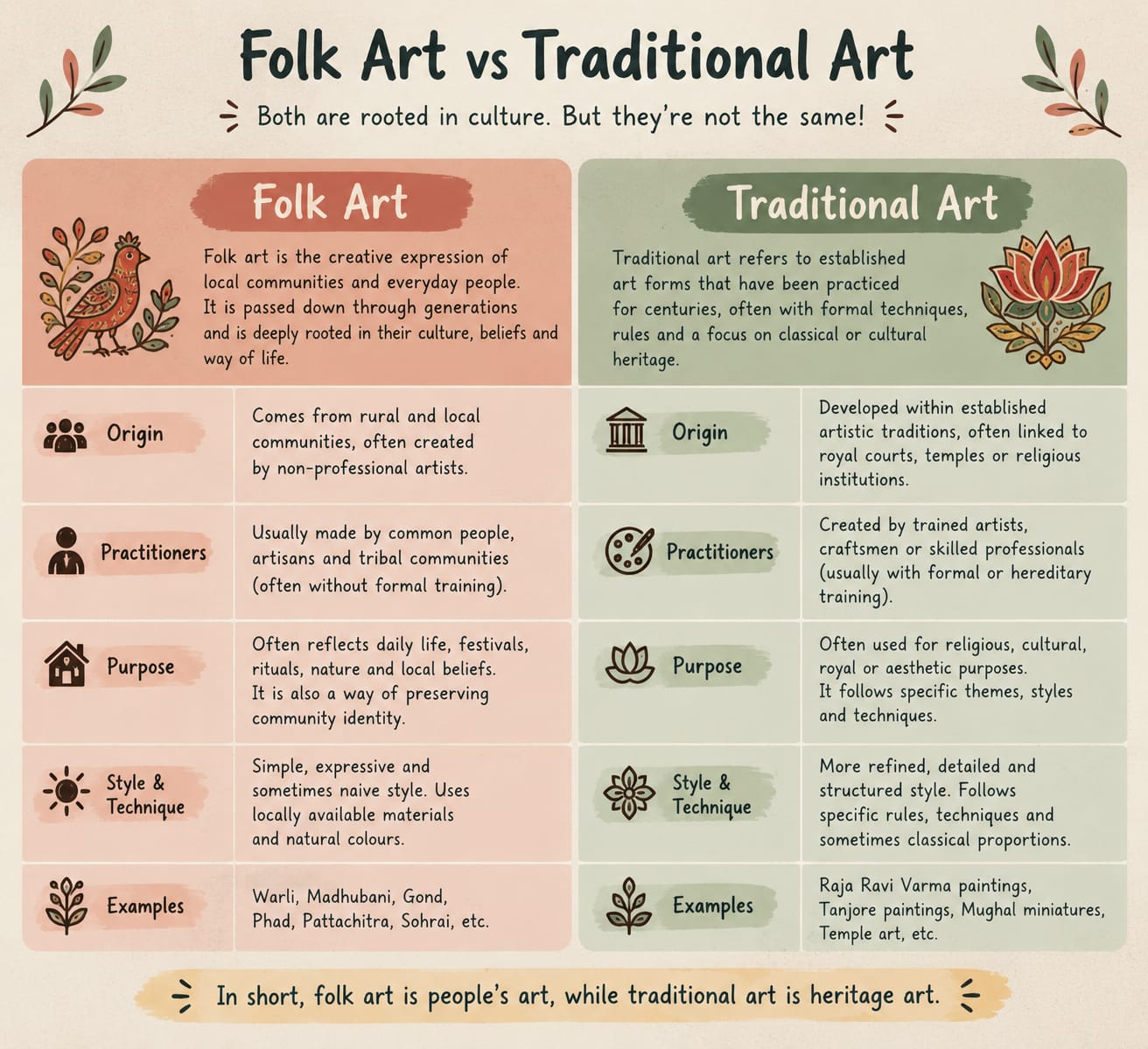
Although these terms are sometimes used interchangeably, they can describe different categories.
Folk art generally refers to artistic traditions rooted in the customs and practices of particular communities. Tribal art is associated more specifically with indigenous or tribal communities and their cultural traditions. Traditional art is a broader term that can include many forms of art passed down through generations.
There can be significant overlap between these categories, which is why individual art forms should be understood within their specific cultural context.
Preserving the Folk Art of India
Preserving Indian folk art requires more than displaying traditional paintings. It involves supporting artists, documenting techniques, encouraging younger generations to learn traditional practices, and creating sustainable markets for authentic work.
Museums, cultural organizations, art fairs, collectors, educators, and consumers can all contribute to this process. Contemporary artists are also helping traditional practices reach new audiences by adapting established techniques while maintaining their cultural roots.