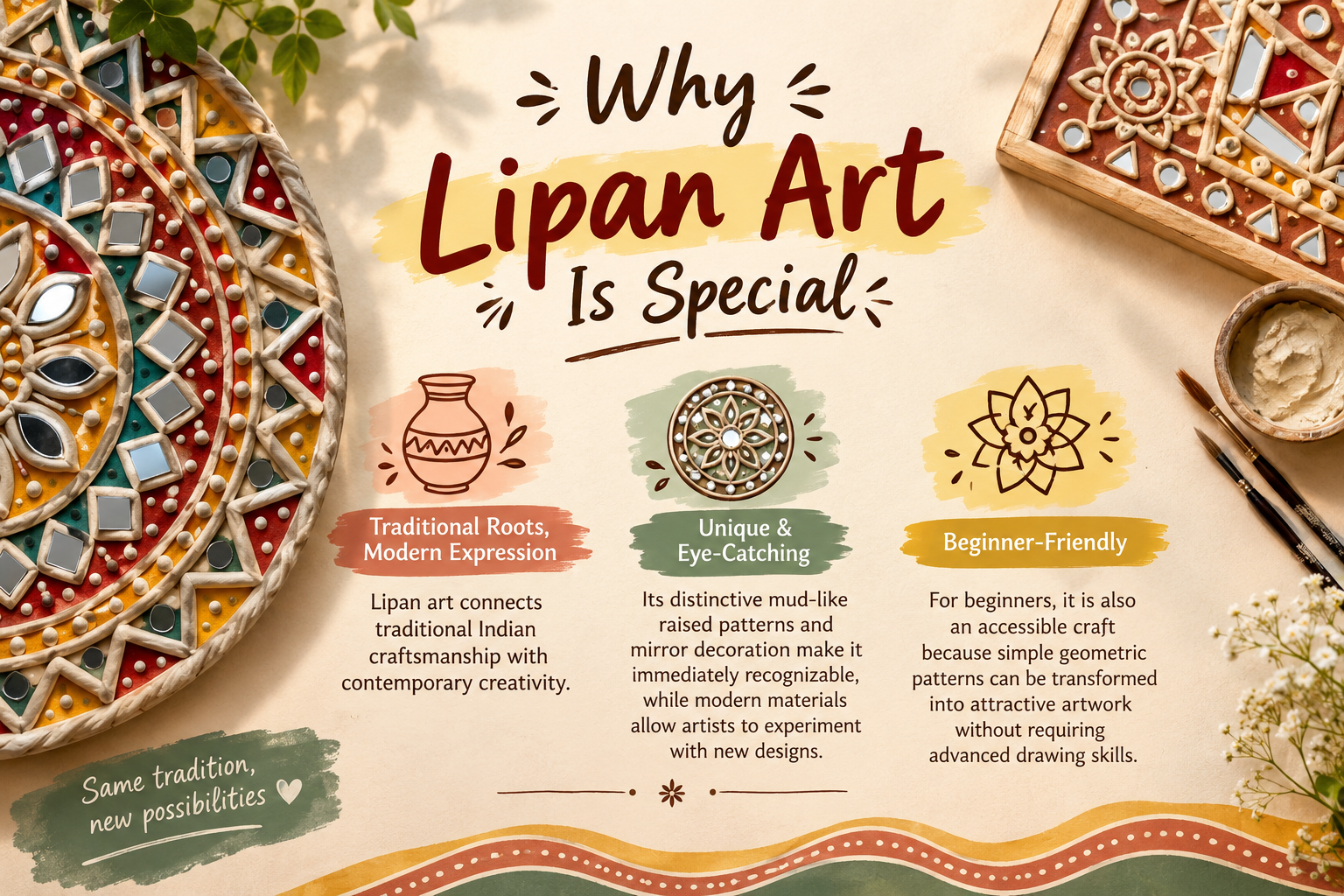
Lipan art, also known as Lippan Kaam, is a beautiful traditional Indian folk art form associated with the Kutch region of Gujarat. Recognized for its raised mud patterns and shimmering mirror work, Lipan art has traditionally been used to decorate the interiors and walls of homes. Today, this heritage craft has also become popular as modern wall décor, handmade artwork, and DIY craft.
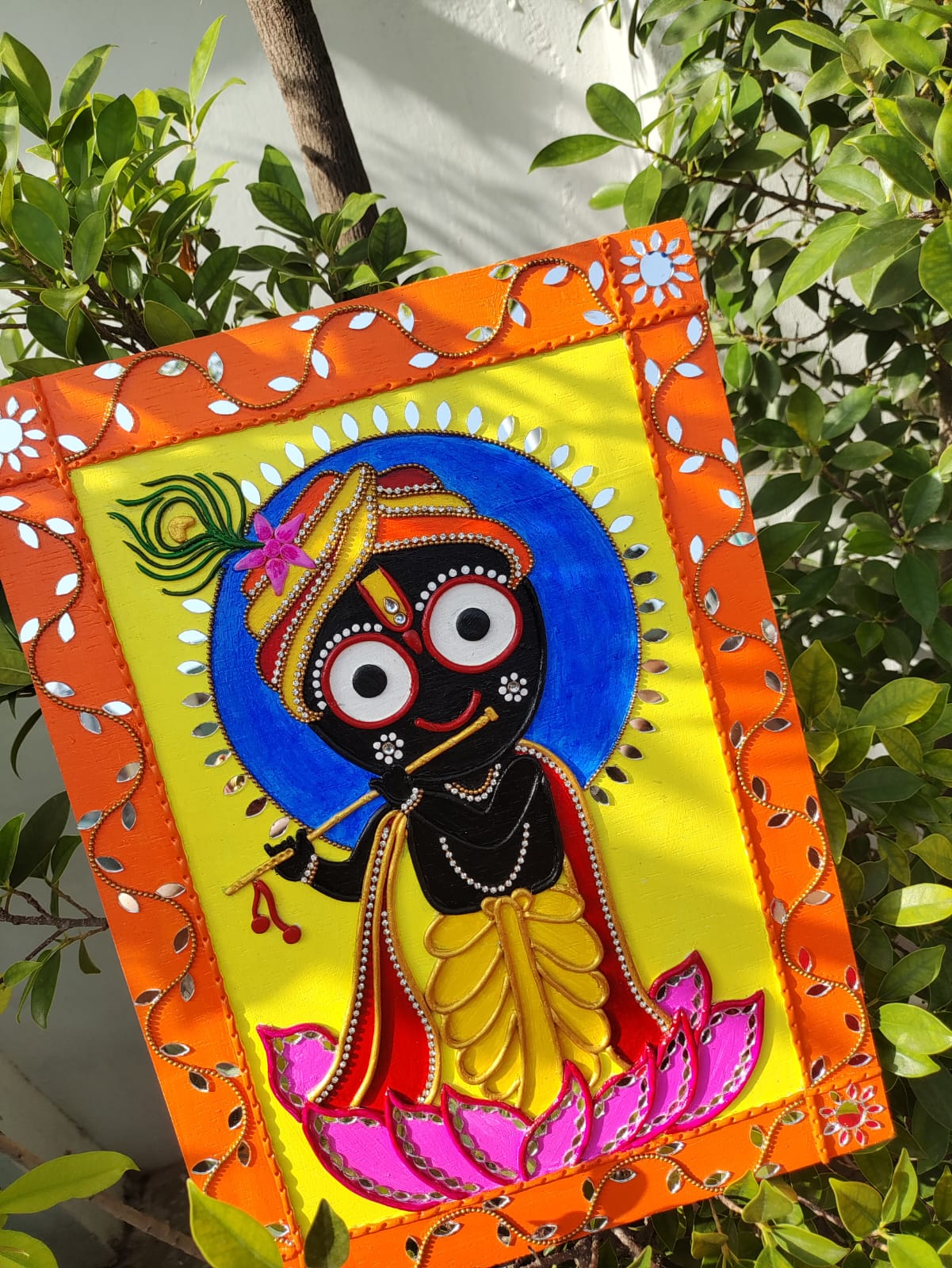
Table of Contents
ToggleWhat Is Lipan Art?
Lipan art is a traditional mud and mirror art that involves creating decorative raised patterns on a surface and embedding small mirrors into the design. Traditionally, artisans used locally available materials such as clay or mud mixed with natural ingredients.
The word Lipan is associated with the process of decorating walls with mud and clay. The combination of earthy textures, geometric patterns, and reflective mirrors gives Lipan art its distinctive appearance.
Although traditional Lipan Kaam was closely connected with rural homes in Kutch, contemporary artists now create it on MDF boards, wooden panels, canvas, and other surfaces.
.
History and Origin of Lipan Art
Lipan art originated in Kutch, Gujarat, where it became an important part of traditional home decoration. It is particularly associated with the mud houses known as bhungas, which are designed to suit the local climate and environment.
Traditionally, women played an important role in creating decorative mud-and-mirror artwork inside homes. The designs were not simply decorative; they also reflected the community’s artistic traditions, surroundings, and cultural identity.
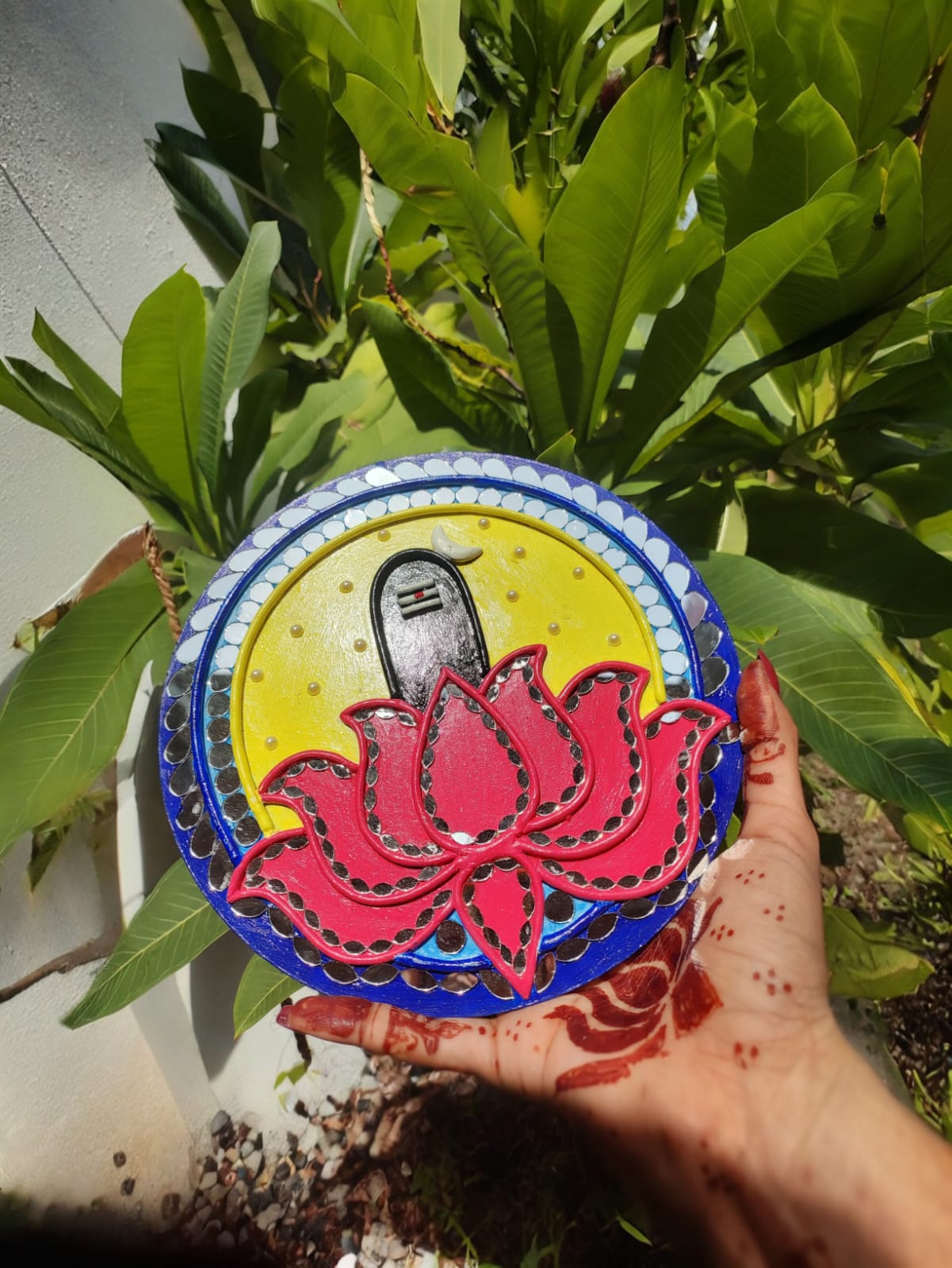
Over time, Lipan art has moved beyond traditional mud houses. Artists today reinterpret its characteristic patterns using modern materials while retaining the visual language of traditional Lippan Kaam.
Cultural Significance of Lipan Art
Lipan art represents the creativity and craftsmanship of the communities of Kutch. Its designs frequently include geometric patterns, flowers, birds, animals, trees, and symbolic motifs.
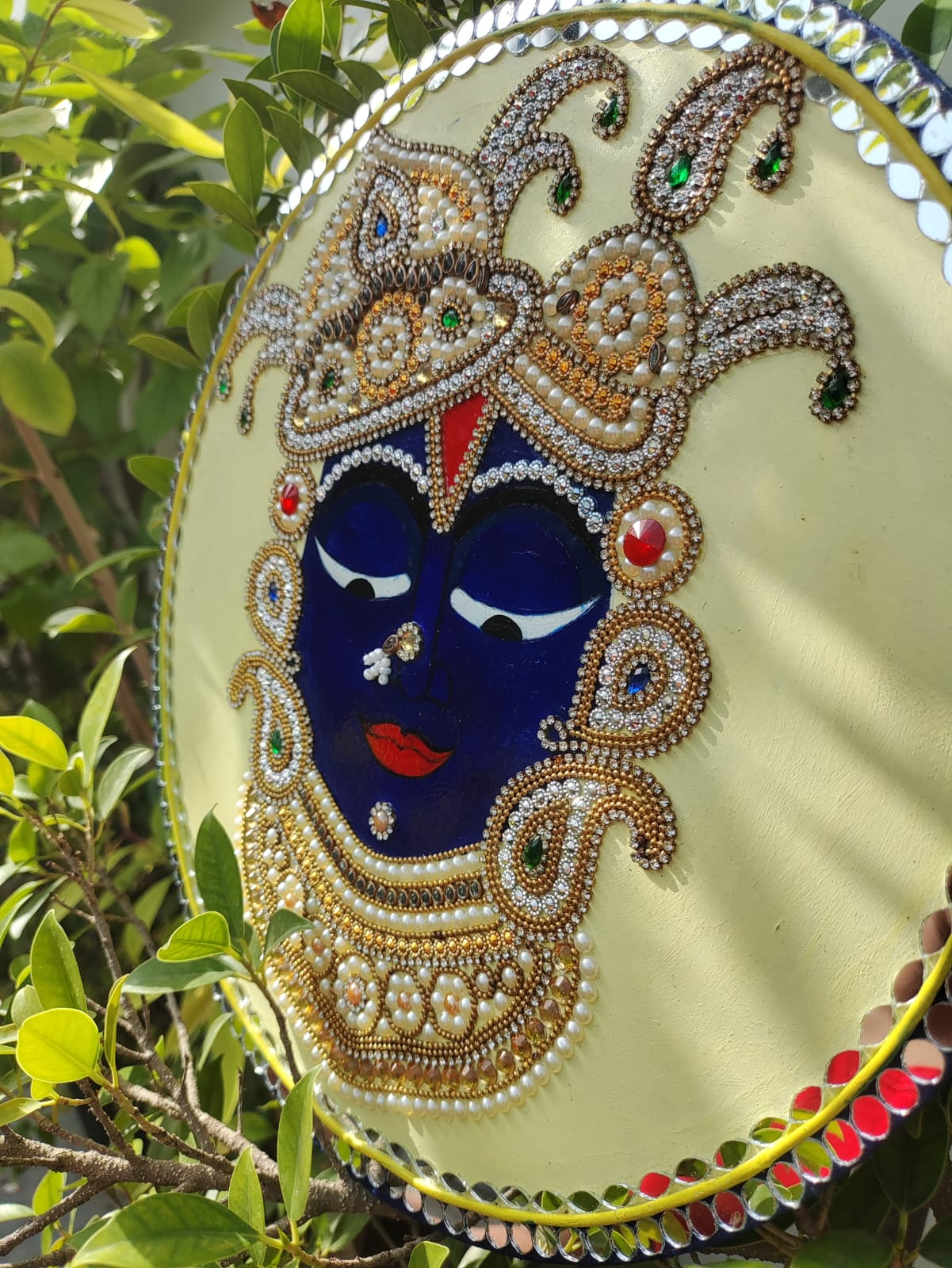
Mirrors are one of its most recognizable elements. When sunlight or artificial light falls on the tiny mirrors, they reflect light across the artwork, creating a lively effect.
The art form also demonstrates how traditional crafts can make use of locally available materials and transform ordinary walls into decorative surfaces.
Traditional Lipan Art Designs and Motifs
Traditional Lipan art is known for detailed patterns created with raised clay or mud. Some popular motifs include:
- Geometric shapes and symmetrical patterns
- Floral designs
- Peacock and other bird motifs
- Camel and animal motifs
- Tree of Life designs
- Circular and mandala-inspired patterns
- Traditional borders and repetitive patterns
Geometric Lipan art designs are particularly suitable for beginners because they can be planned using simple lines, circles, triangles, and repeated shapes.
Modern artists often combine traditional motifs with contemporary compositions, making Lipan art suitable for both traditional and modern interiors.

Materials Required for Lipan Art
The materials used depend on whether you want to create traditional or contemporary Lipan art.
| Traditional Materials | Modern Materials |
|---|---|
| Clay or mud | MDF board |
| Natural mixture | Air-dry clay or modelling material |
| Small mirrors | Craft mirrors |
| Natural pigments | Acrylic paints |
| Basic tools | Glue and craft tools |
For a beginner project, an MDF board, modelling clay, small mirrors, adhesive, pencil, ruler, and acrylic paint can be enough to create a decorative Lipan art piece.
How to Make Lipan Art at Home
Creating Lipan art can be divided into several simple stages.
Step 1: Prepare the Base
Choose a flat and sturdy surface such as MDF or a wooden board. Clean the surface so that the clay and other materials adhere properly.
Step 2: Create Your Design
Before applying clay, lightly draw the design with a pencil. Plan the symmetry and position of the mirrors beforehand.
Beginners can start with simple geometric patterns instead of complicated motifs.
Step 3: Apply the Clay
Roll or prepare small pieces of clay and place them along the drawn lines. Press and shape the material carefully to create raised borders and patterns.
The raised surface is one of the defining visual characteristics of Lipan art.
Step 4: Add the Mirrors
Place small mirrors into the clay or attach them according to the technique being used. Circular, square, triangular, and irregular mirrors can all be incorporated into contemporary designs.
Step 5: Allow It to Dry
Let the artwork dry completely before painting or moving on to the finishing stage. Drying time depends on the material, thickness, humidity, and environmental conditions.
Step 6: Paint and Finish
Once the artwork is completely dry, paint the background and raised patterns according to your chosen design. White, earthy, metallic, and vibrant color combinations can produce very different visual effects.
Traditional Lipan Art vs Modern Lipan Art
Traditional and modern Lipan art share the same basic visual identity but differ in materials and applications.
Feature | Traditional Lipan Art | Modern Lipan Art |
Base | Mud walls and traditional homes | MDF, wood and other boards |
Materials | Mud and natural materials | Clay, craft materials and adhesives |
Design | Traditional motifs | Traditional + contemporary designs |
Use | Home decoration | Wall décor, gifts and craft projects |
Technique | Traditional handmade methods | Handmade and DIY techniques |
Modern adaptations have made Lipan art easier for hobby artists and craft enthusiasts to explore while keeping its traditional aesthetic recognizable.
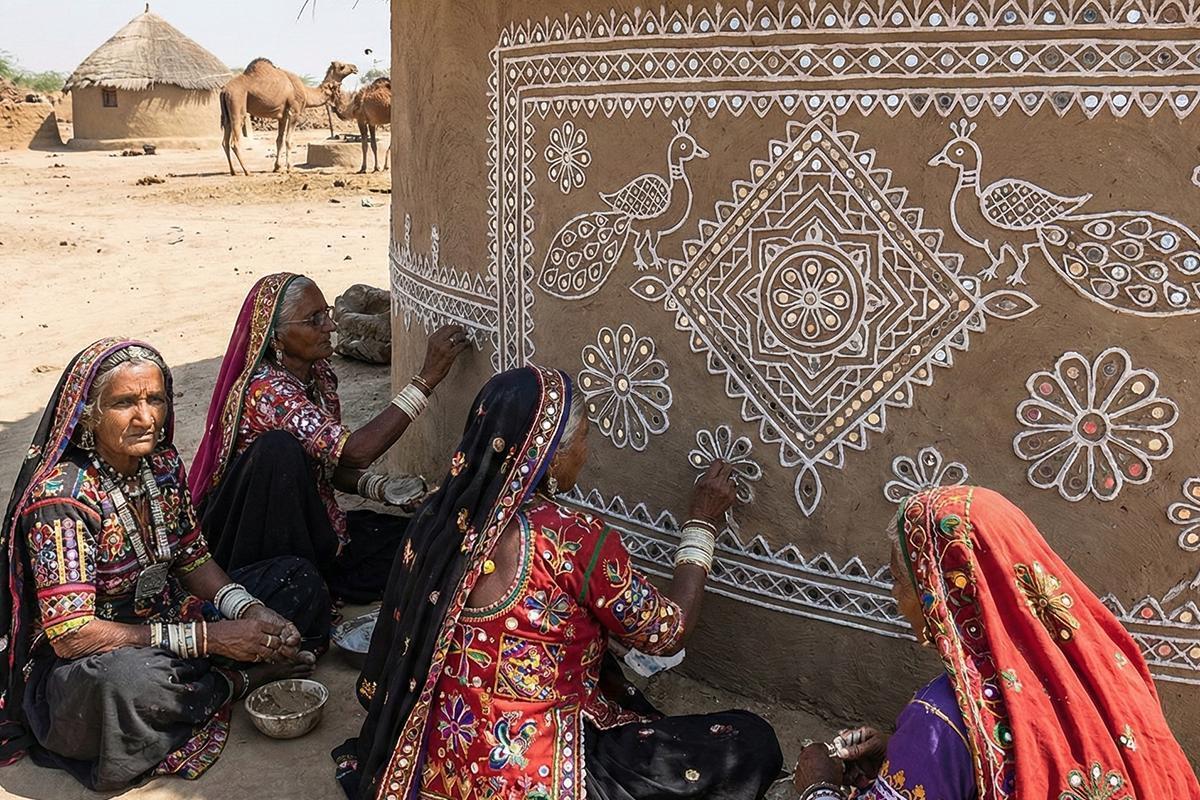
Traditional lipan art
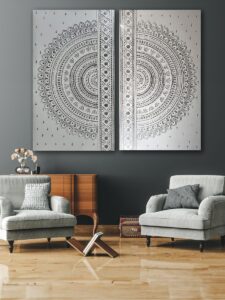
Modern lipan art
Easy Lipan Art Ideas for Beginners
If you are trying Lipan art for the first time, choose a design that does not require complicated detailing. Some beginner-friendly ideas include:
- Simple geometric Lipan art
- Circular mirror patterns
- Floral Lipan art
- Small mandala-inspired designs
- Minimalist wall panels
- Tree of Life-inspired designs
- Peacock-inspired motifs
- Border-style Lipan patterns
Starting with a small MDF board can also make the project easier to manage
Common Lipan Art Mistakes and How to Avoid Them
Beginners may face several common problems while making Lipan art.
Uneven patterns: Use a ruler, compass, or template to maintain symmetry.
Cracking: Avoid applying excessively thick layers of material and allow the artwork to dry properly.
Loose mirrors: Make sure the mirrors are firmly secured and the surface is suitable for the chosen adhesive
Messy finishing: Plan the design before applying clay and clean unwanted material before it completely dries.
Uneven raised lines: Apply similar amounts of clay throughout the design and work slowly around curves
Modern Uses of Lipan Art
Today, Lipan art is used for more than traditional wall decoration. Contemporary artists create:
- Decorative wall panels
- Home décor pieces
- Mirrors and frames
- Handmade gifts
- Decorative trays
- Festival décor
- Customized artwork
- DIY craft projects
Its combination of texture and reflective mirrors makes it particularly attractive for interior decoration
Why Lipan Art Is Special
Lipan art connects traditional Indian craftsmanship with contemporary creativity. Its distinctive mud-like raised patterns and mirror decoration make it immediately recognizable, while modern materials allow artists to experiment with new designs.
For beginners, it is also an accessible craft because simple geometric patterns can be transformed into attractive artwork without requiring advanced drawing skills