
Madhubani art, also known as Mithila art, is one of India’s most distinctive traditional folk-art forms. Originating in the Mithila region of Bihar, this art is recognized for its intricate patterns, bold outlines, vibrant colors, and symbolic themes. Traditionally created on walls and floors, Madhubani painting has evolved into artwork on paper, canvas, fabric, and other modern surfaces.
Today, Madhubani art is appreciated not only as a traditional craft but also as an important part of India’s cultural heritage.
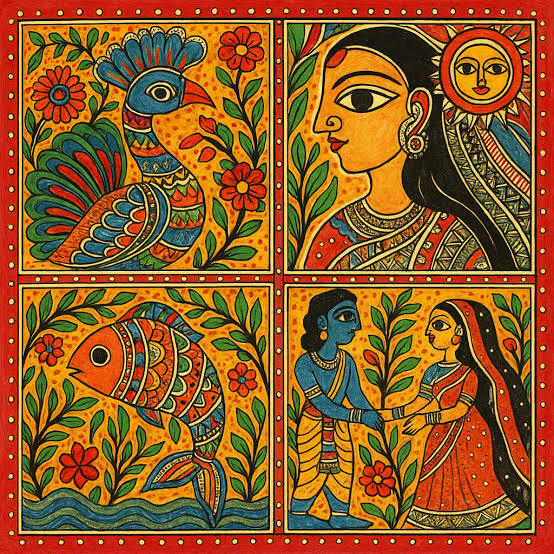
Table of Contents
ToggleWhat Is Madhubani Art?
Madhubani art is a traditional painting style characterized by detailed linework, geometric patterns, decorative borders, and colorful representations of nature, mythology, animals, and everyday life.
A unique feature of Madhubani painting is the way artists fill spaces with lines, dots, patterns, and motifs. Many traditional paintings avoid leaving large empty spaces, creating a dense and visually rich composition.
The art can be created using natural colors and traditional tools, while contemporary artists also use acrylic paints, pens, brushes, and canvas.
History and Origin of Madhubani Art
Madhubani art originated in the Mithila region of Bihar, particularly around the Madhubani district. Traditionally, women created paintings on the walls and floors of their homes during festivals, weddings, and other important occasions.
These paintings were closely connected with cultural and religious traditions. Designs were often used to decorate spaces during weddings and celebrations, while motifs represented fertility, prosperity, nature, and spiritual beliefs.
Over time, Madhubani paintings moved from traditional walls to handmade paper and canvas. This transition helped the art reach audiences across India and internationally while allowing artists to develop new subjects and styles
Five Main Styles of Madhubani Art
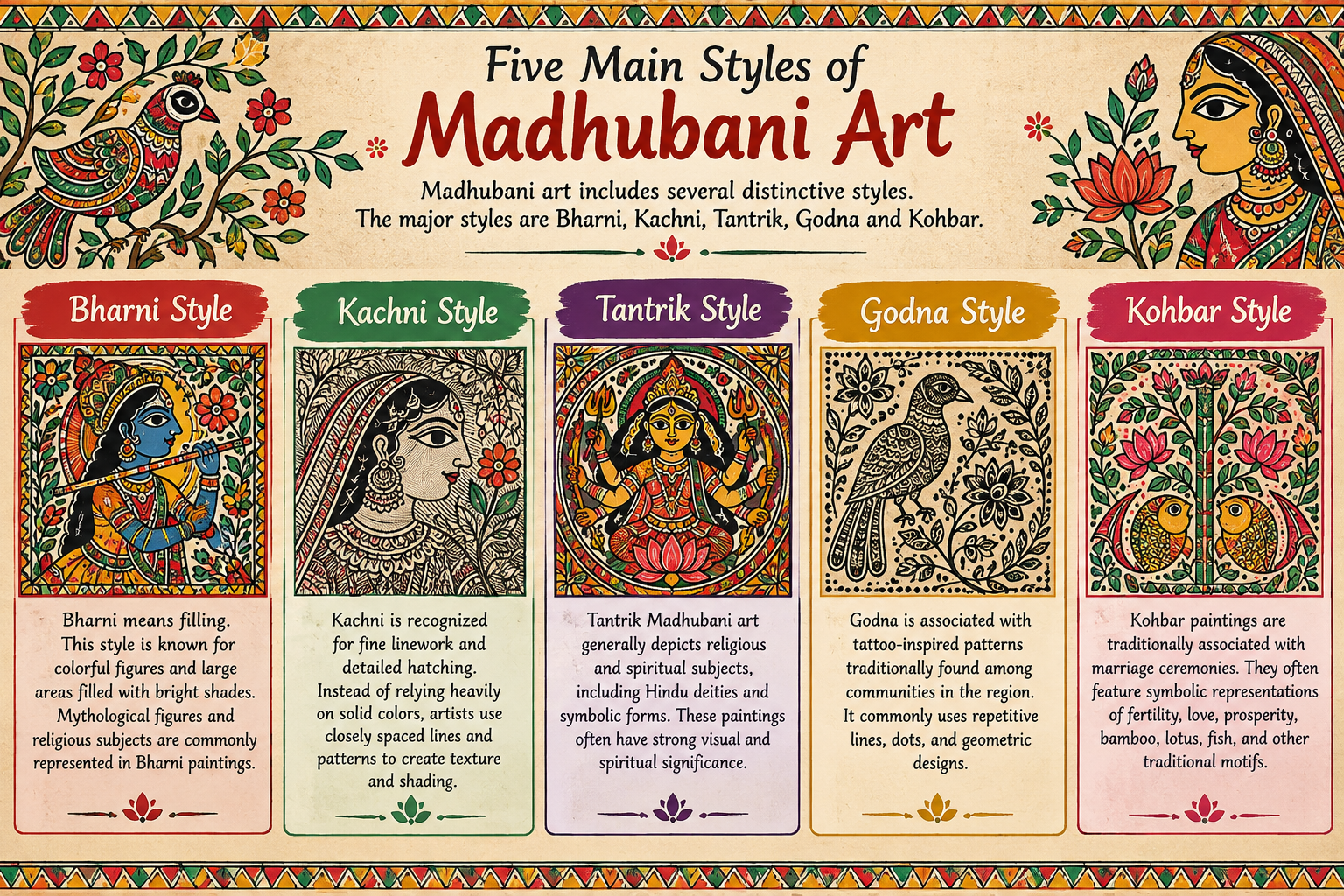
Madhubani art includes several distinctive styles. The major styles are Bharni, Kachni, Tantrik, Godna, and Kohbar.
Bharni Style
Bharni means filling. This style is known for colorful figures and large areas filled with bright shades. Mythological figures and religious subjects are commonly represented in Bharni paintings.
Kachni Style
Kachni is recognized for fine linework and detailed hatching. Instead of relying heavily on solid colors, artists use closely spaced lines and patterns to create texture and shading.
Tantrik Style
Tantrik Madhubani art generally depicts religious and spiritual subjects, including Hindu deities and symbolic forms. These paintings often have strong visual and spiritual significance.
Godna Style
Godna is associated with tattoo-inspired patterns traditionally found among communities in the region. It commonly uses repetitive lines, dots, and geometric designs.
Kohbar Style
Kohbar paintings are traditionally associated with marriage ceremonies. They often feature symbolic representations of fertility, love, prosperity, bamboo, lotus, fish, and other traditional motifs.
Popular Madhubani Art Motifs and Their Meanings
Symbols are an important part of Madhubani art. Different motifs can represent different cultural or spiritual ideas.
Fish commonly represents fertility, prosperity, and abundance.
Peacocks are associated with beauty, love, and romance and are frequently used in decorative compositions.
Lotus flowers can symbolize purity, fertility, and spiritual significance.
Sun and moon are often represented as powerful natural elements and can symbolize life, energy, and continuity.
Trees and the Tree of Life represent nature, growth, connection, and life.
Other common motifs include elephants, turtles, birds, flowers, snakes, and geometric forms.
Traditional Materials Used in Madhubani Art
Traditional Madhubani artists used materials that were easily available in their surroundings. Natural pigments were often prepared from plants, minerals, charcoal, and other sources.
Traditional Materials | Modern Materials |
Natural pigments | Acrylic paints |
Handmade paper | Canvas |
Bamboo pens | Fine-tip art pens |
Twigs and brushes | Paintbrushes |
Natural dyes | Commercial colors |
The choice of materials has expanded significantly as Madhubani art has become popular among contemporary artists and craft enthusiasts.
How to Make Madhubani Art: Step-by-Step
Creating Madhubani art can be an enjoyable activity for beginners. A simple design can be created by following these steps
Step 1: Choose Your Surface
Start with handmade paper, drawing paper, canvas, or another suitable surface. Beginners may find paper easier to work with.
Step 2: Plan the Border
Traditional Madhubani paintings often use decorative borders. Draw a simple double-line or patterned border around the artwork.
Step 3: Draw the Main Motif
Choose a central subject such as a fish, peacock, lotus, tree, or traditional figure. Draw the main outline carefully.
Step 4: Add Detailed Patterns
Fill the figures and empty spaces with dots, lines, waves, leaves, flowers, geometric shapes, and other decorative patterns.
Step 5: Add Colors
Use traditional-inspired or modern colors according to your design. Try to maintain a balanced combination rather than using too many unrelated shades.
Step 6: Finish the Artwork
After the colors dry, review the outlines and add any missing details. A strong black or dark outline can help define the characteristic appearance of Madhubani painting.
Key Characteristics of Madhubani Art
Madhubani art has several features that make it easy to recognize:
- Intricate linework
- Bold outlines
- Decorative borders
- Geometric patterns
- Repeated motifs
- Bright and contrasting colors
- Symbolic representation of nature
- Mythological and cultural themes
- Detailed filling of empty spaces
- Flat, two-dimensional compositions
The combination of these elements creates the distinctive visual identity of Madhubani art.
Traditional vs Modern Madhubani Art
Traditional and contemporary Madhubani paintings share many characteristics, but their materials and applications can differ.
Feature | Traditional Madhubani Art | Modern Madhubani Art |
Surface | Mud walls and floors | Paper, canvas, fabric and boards |
Colors | Natural pigments | Acrylic and other paints |
Tools | Bamboo pens and twigs | Brushes and fine-tip pens |
Themes | Religious, cultural and social | Traditional + contemporary subjects |
Use | Rituals and home decoration | Art, décor, fashion and crafts |
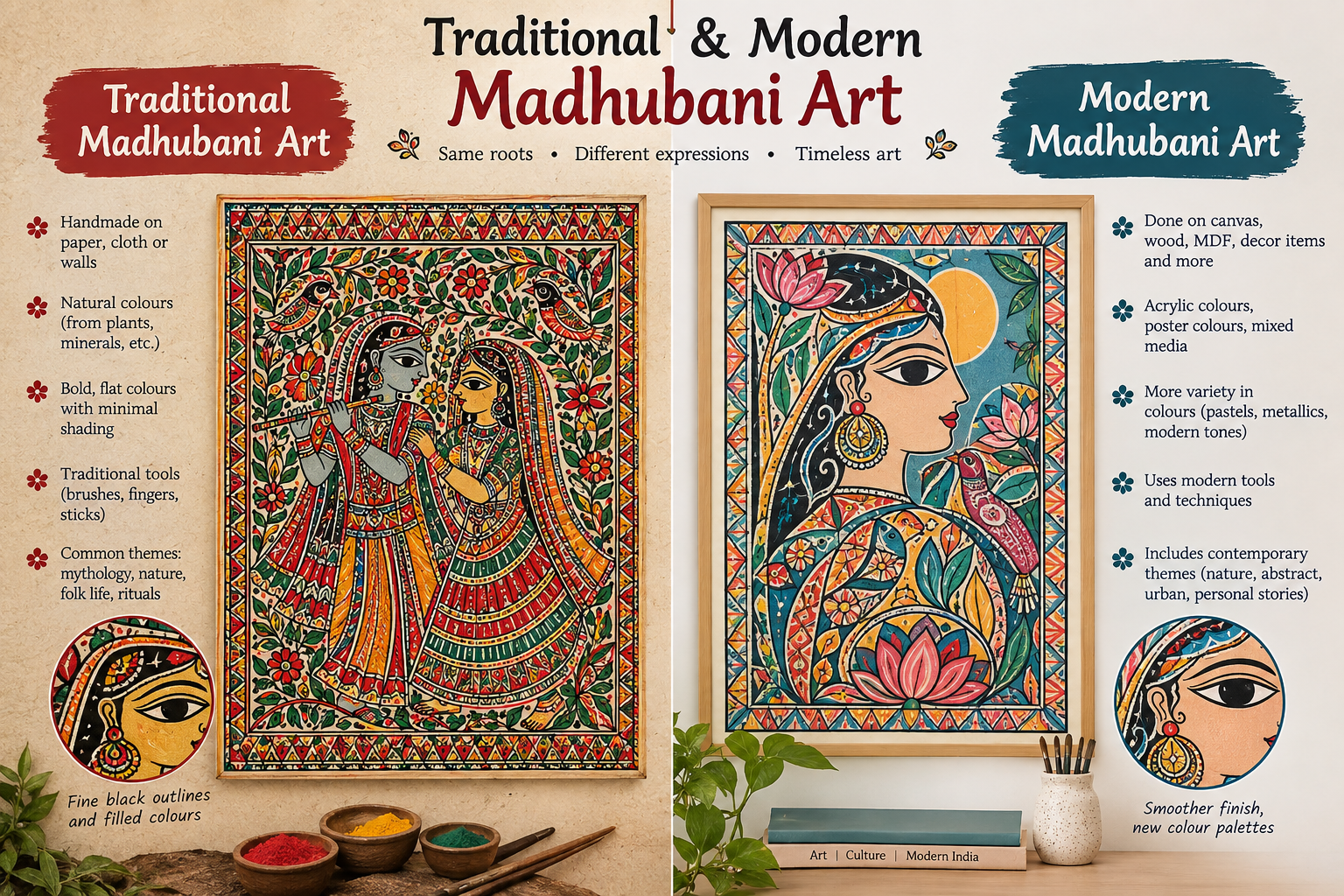
Modern artists have also used Madhubani techniques to address subjects such as environmental protection, women’s empowerment, social issues, and contemporary life
Easy Madhubani Art Ideas for Beginners
If you are new to Madhubani art, start with simple subjects. Some easy ideas include:
- Fish Madhubani painting
- Peacock Madhubani art
- Lotus flower design
- Simple Tree of Life
- Geometric Madhubani patterns
- Sun and moon design
- Floral border
- Simple elephant or bird motif
Start with basic outlines and gradually introduce more detailed patterns as your skills improve.
Famous Madhubani Artists
Several artists have helped bring Madhubani art to wider audiences. Sita Devi and Ganga Devi are among the well-known artists associated with the tradition, while contemporary artists such as Baua Devi have continued to develop and represent Madhubani art.
Their work demonstrates how traditional techniques can be preserved while allowing individual artists to express personal experiences and contemporary ideas.
Madhubani Art in Modern Home Décor
Today, Madhubani art can be found in many forms of home decoration. Paintings can be displayed as wall art, while traditional motifs are also used on trays, fabrics, furniture, notebooks, lampshades, and decorative objects.
Its detailed patterns and vibrant colors make Madhubani artwork suitable for interiors that want an artistic Indian aesthetic.
How to Identify Authentic Madhubani Art
When purchasing Madhubani artwork, look for characteristics such as detailed hand-drawn linework, traditional motifs, carefully filled patterns, and consistent use of Madhubani techniques.
A handmade original will generally have individual variations that are not present in mass-produced printed reproductions. If authenticity and provenance are important, look for information about the artist, materials, technique, and place of creation.
Preservation and Care of Madhubani Art
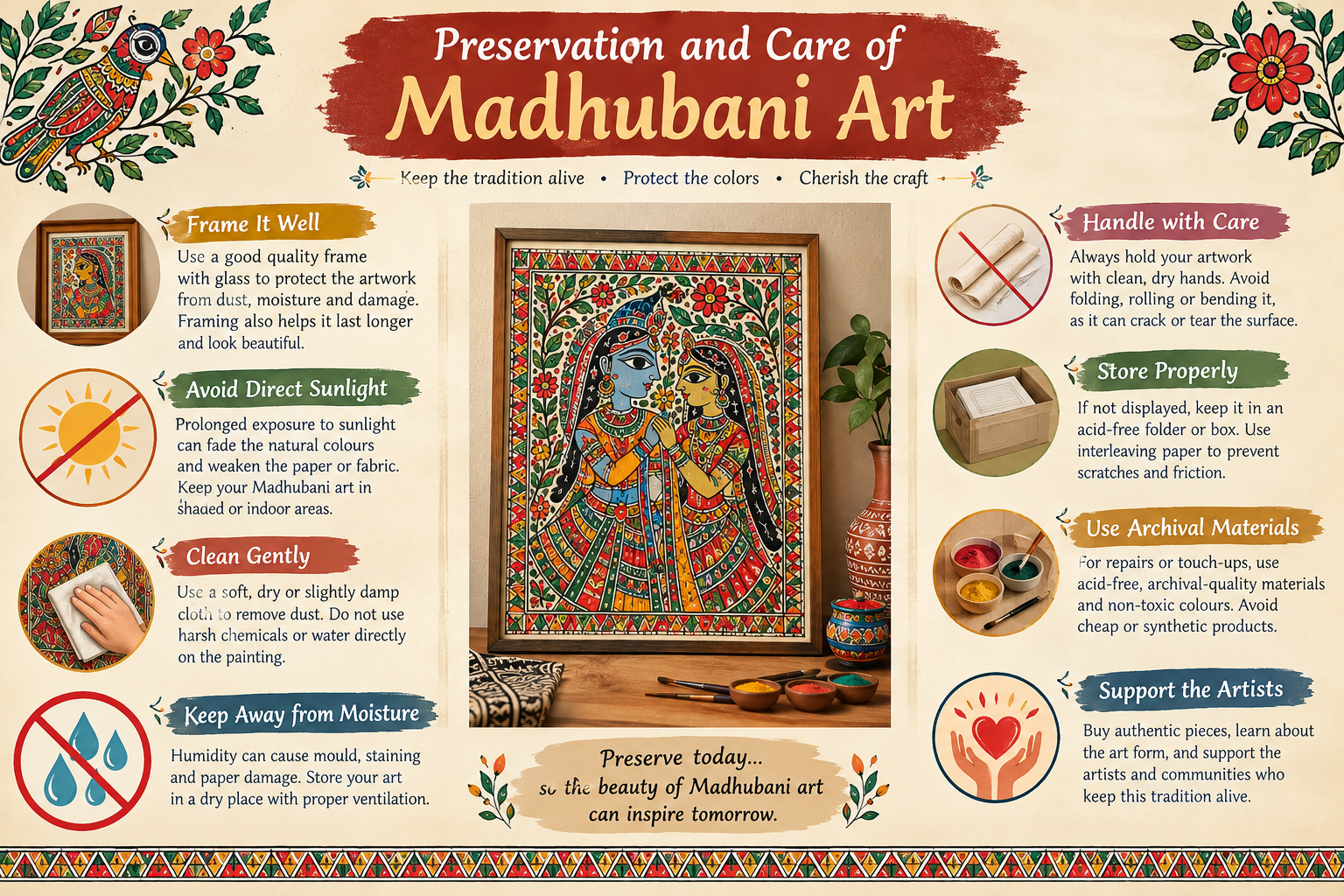
Proper care can help preserve Madhubani paintings for a long time. Keep artwork away from excessive moisture, direct sunlight, and dusty environments. Framing works on paper or canvas behind suitable protective glazing can provide additional protection.
Handle handmade artwork carefully, especially when it uses natural pigments or delicate paper.
Frequently Asked Questions About Madhubani Art
What is Madhubani art?
Where did Madhubani art originate?
Why is Madhubani art also called Mithila art?
What does the fish symbolize in Madhubani art?
Can beginners learn Madhubani art at home?
Why Madhubani Art Is Important
Madhubani art is a beautiful representation of India’s rich folk-art heritage. From traditional wall paintings in Bihar to contemporary artwork displayed around the world, it has successfully evolved while retaining its distinctive patterns, motifs, and cultural identity.
Learning Madhubani art is not only an opportunity to explore a creative technique but also a way to understand the traditions, symbolism, and stories behind one of India’s most recognizable folk-art forms.