
Warli art is one of India’s most distinctive forms of tribal and folk art. Known for its simple geometric shapes, white figures, and scenes inspired by everyday village life, Warli painting beautifully represents the relationship between people, nature, animals, and community traditions. Although its visual style appears simple, every figure and pattern carries cultural meaning.
Today, Warli art can be found not only on traditional mud walls but also on paper, canvas, wood, home décor products, clothing, and modern artworks
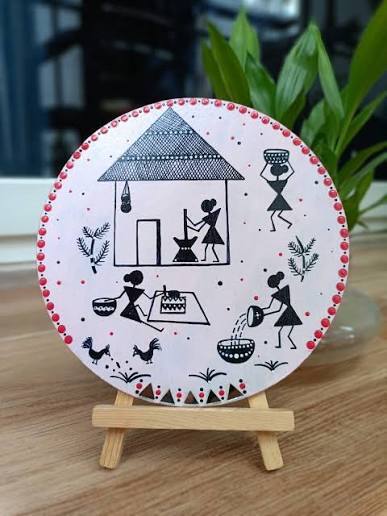
Table of Contents
ToggleWhat Is Warli Art?
Warli art is a traditional tribal painting style associated with the Warli community of Maharashtra, India. Traditionally, paintings were created on mud walls using a simple white pigment made from rice paste.
The artwork generally features human figures, animals, trees, houses, farming activities, celebrations, and rituals. Instead of realistic drawings, artists use basic geometric shapes such as circles, triangles, squares, and lines.
The simplicity of these shapes is one of the most recognizable characteristics of Warli painting.
Origin and History of Warli Art
Warli art originated among the Warli tribal communities of Maharashtra, particularly in areas around the northern parts of the state. Traditionally, these paintings were closely connected with important social and religious occasions.
Warli paintings were often created on the walls of houses during weddings, festivals, harvests, and other significant events. They were not originally made simply for decoration. Instead, they were connected to the community’s traditions, beliefs, ceremonies, and relationship with nature.
Over time, Warli art moved beyond village walls and became recognized as an important form of Indian folk art.
Key Characteristics of Warli Art
The most recognizable features of Warli art include:
- Simple geometric shapes
- White figures against an earthy background
- Scenes of village and community life
- Human and animal figures
- Nature-inspired elements
- Circular compositions
- Dancing figures, especially the Tarpa dance
- Farming and hunting scenes
- Ritual and wedding-related imagery
The artwork demonstrates how complex stories can be communicated through very simple visual forms.
Geometric Shapes Used in Warli Art
Geometry plays an important role in Warli painting. Human bodies are commonly created using triangles, while circles and lines are used to form heads, limbs, trees, and other elements.
The circle is often associated with natural elements such as the sun and moon. The triangle can represent mountains, trees, or the human body. The square may represent a sacred or enclosed space.
These basic shapes allow artists to create complete scenes without using detailed realistic figures.
Warli Art Symbols and Their Meanings
Warli paintings contain many symbols inspired by nature and daily life.
Symbol | Common Representation |
Circle | Sun, moon and natural cycles |
Triangle | Mountains, trees and human forms |
Square | Sacred or enclosed space |
Tree | Nature and life |
Animals | Connection with the natural world |
Dancing figures | Celebration and community |
Farming scenes | Agriculture and village life |
Tarpa dance | Community celebration and tradition |
The exact interpretation of symbols can vary according to the context of the artwork.
Common Themes in Warli Paintings
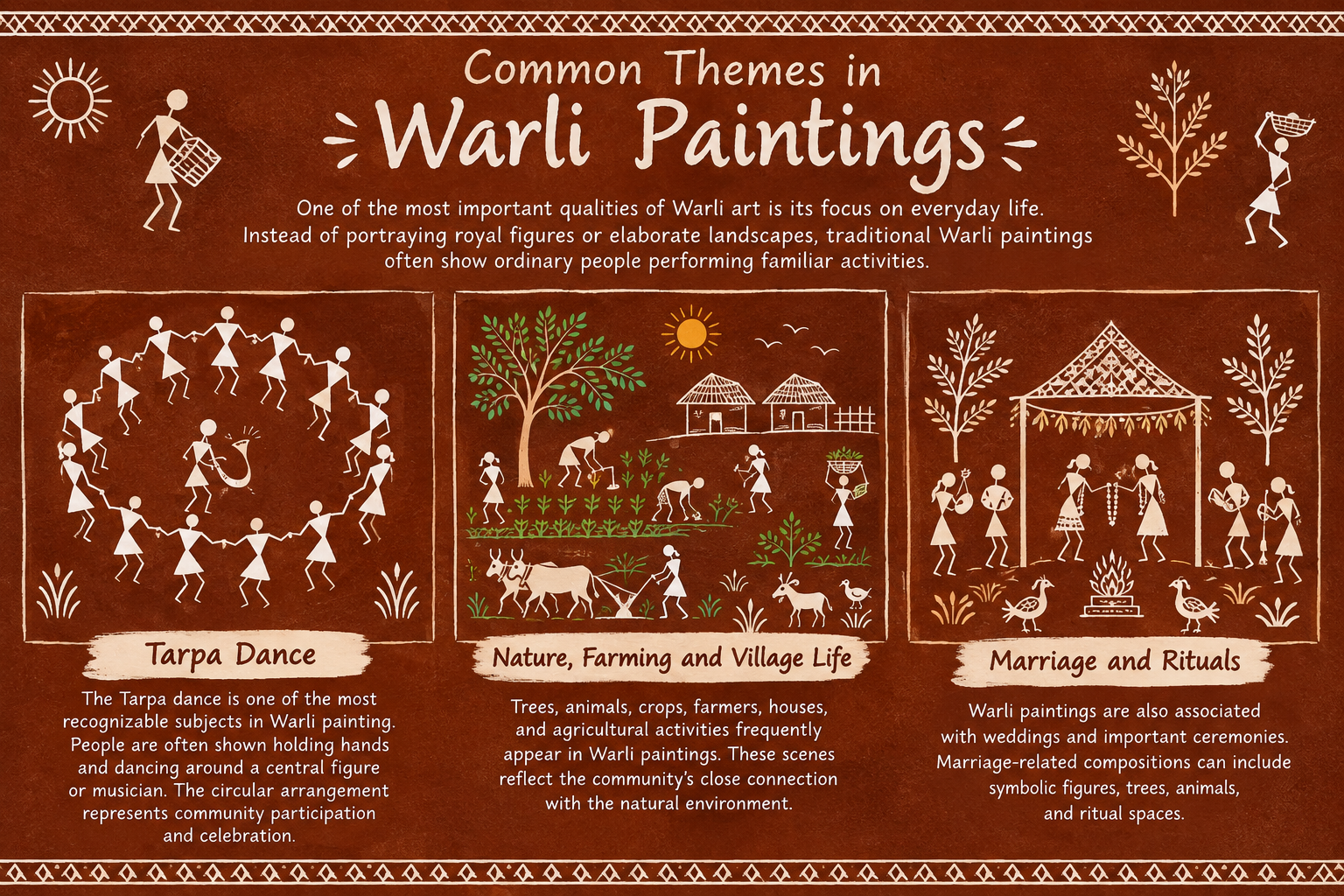
One of the most important qualities of Warli art is its focus on everyday life. Instead of portraying royal figures or elaborate landscapes, traditional Warli paintings often show ordinary people performing familiar activities.
Tarpa Dance
The Tarpa dance is one of the most recognizable subjects in Warli painting. People are often shown holding hands and dancing around a central figure or musician. The circular arrangement represents community participation and celebration.
Nature, Farming and Village Life
Trees, animals, crops, farmers, houses, and agricultural activities frequently appear in Warli paintings. These scenes reflect the community’s close connection with the natural environment.
Marriage and Rituals
Warli paintings are also associated with weddings and important ceremonies. Marriage-related compositions can include symbolic figures, trees, animals, and ritual spaces.
Traditional Warli Art Materials
Traditional Warli paintings were made using locally available materials. Artists commonly used mud or clay to prepare the wall surface and rice paste to create white designs.
Today, artists use many modern materials, including:
- Paper
- Canvas
- MDF boards
- Acrylic paints
- White paint
- Wooden surfaces
- Brushes and drawing tools
This change in materials has helped Warli art become accessible to contemporary artists and beginners.
How Is Warli Painting Made?
Creating a Warli painting generally begins with preparing the background. Traditionally, the wall was coated with a mixture that created an earthy surface. A white pigment was then used to draw the figures and patterns.
A simple modern Warli painting can be created through these steps:
- Choose a suitable surface such as paper, canvas, or MDF.
- Create an earthy or contrasting background.
- Sketch basic circles, triangles, and lines.
- Add human and animal figures.
- Include trees, houses, farming scenes, or dancing figures.
- Create a balanced composition.
- Add small decorative details.
- Allow the painting to dry completely.
The process is relatively beginner-friendly because it does not require highly realistic drawing skills.
Warli Art for Beginners
Warli art is an excellent choice for beginners who want to explore Indian folk art. Start with basic geometric figures rather than attempting a complicated composition.
A simple beginner design could include a tree, two or three people, a hut, and a few dancing figures. Once you become comfortable with geometric shapes, you can create larger scenes involving festivals, farming, animals, and village life.
Traditional Warli Art vs Modern Warli Art
Traditional Warli art was primarily created on mud walls and was closely connected with community rituals and ceremonies. Modern Warli art uses new surfaces and materials and is often created for decoration, education, fashion, products, and contemporary artwork.
Despite these changes, modern artists continue to use the characteristic geometric figures and storytelling style associated with traditional Warli painting.
Cultural Importance of Warli Art
Warli art is more than a decorative painting style. It provides a visual representation of community life, traditional knowledge, celebrations, nature, and cultural practices.
Its simple figures demonstrate how visual storytelling can communicate ideas without realistic details. The repeated appearance of humans, animals, plants, and village activities highlights the importance of community and the environment.
Warli art therefore plays an important role in preserving and sharing aspects of India’s tribal artistic heritage.
Warli Art in Modern Times
Today, Warli art has expanded beyond traditional walls. Artists use the style on canvas, clothing, furniture, notebooks, home décor, accessories, and other creative products.
Modern Warli-inspired designs are also popular for wall décor because their simple monochromatic figures can create attractive compositions without requiring excessive detail.
However, as the art form becomes commercialized, it is important to respect its cultural origins and acknowledge the traditions of the Warli community.
Warli Art vs Madhubani Art
Warli art and Madhubani art are both important Indian folk-art traditions, but their visual styles are different.
Feature | Warli Art | Madhubani Art |
Origin | Maharashtra | Bihar |
Main Style | Geometric and minimal | Detailed and decorative |
Common Colors | Traditionally white on earthy backgrounds | Multiple bright colors |
Figures | Simple geometric figures | Detailed human, animal and nature motifs |
Themes | Village life, nature, rituals | Mythology, nature, religious and social themes |
Both art forms demonstrate India’s rich tradition of visual storytelling.
Preservation and Care of Warli Art
Proper care can help preserve Warli paintings for a longer period. Keep artworks away from excessive moisture, direct sunlight, and dust. Framing paintings behind protective glass can also help prevent physical damage.
For traditional artworks, preservation should also involve respecting the cultural context and supporting artists and communities who continue the tradition.